



15 September 2026
Breakfast, belonging, and wellbeing in secondary schools: what schools and young people say
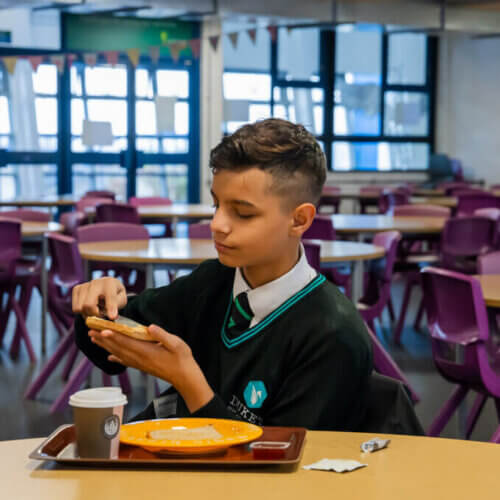
“We wish more people understood that the need for free breakfast provision in secondary schools is significant and growing […] Free breakfast provision is about far more than food […] and ensures students are able to access education feeling settled, supported, and ready to learn.”
Every child and young person should arrive at school ready to learn, not distracted by hunger. Yet 2.2 million children across the UK are at risk of going hungry in the morning. That’s five pupils in every class of 30.1 Government-funded breakfast provision is becoming part of primary education across much of the UK. But secondary schools are missing from these plans.
For example, in England, the National School Breakfast Programme (NSBP) currently provides funding to around 900 schools with secondary-aged pupils in areas of high disadvantage, but this funding is due to end in 2027.
We have provided breakfast and expert support to primary schools for over 20 years and to secondary schools for over 10 years. We know that secondary-aged pupils face different challenges from younger children. Many arrive at school hungry, worried, or unsettled. At the same time, they are dealing with the challenges of growing up. These can include greater academic expectations, changing friendships, mental health challenges, or a growing awareness of financial pressures at home.
Teacher, The Ruth Gorse Academy, Secondary, Yorkshire & Humberside
We wish more people understood that the need for free breakfast provision in secondary schools is significant and growing. Hunger and food insecurity do not disappear as children get older, and many secondary-aged students quietly manage the pressures of poverty without drawing attention to themselves.
Free breakfast provision is about far more than food; it supports attendance, concentration, behaviour, emotional wellbeing, and safeguarding. For some students, it provides routine, stability, and a positive start to the day that they may not otherwise have access to.
Secondary school students can often be overlooked when support is targeted towards younger children, but they face many of the same challenges whilst also dealing with increased academic pressures, social expectations, and mental health needs. Breakfast provision helps remove barriers to learning and ensures students are able to access education feeling settled, supported, and ready to learn.
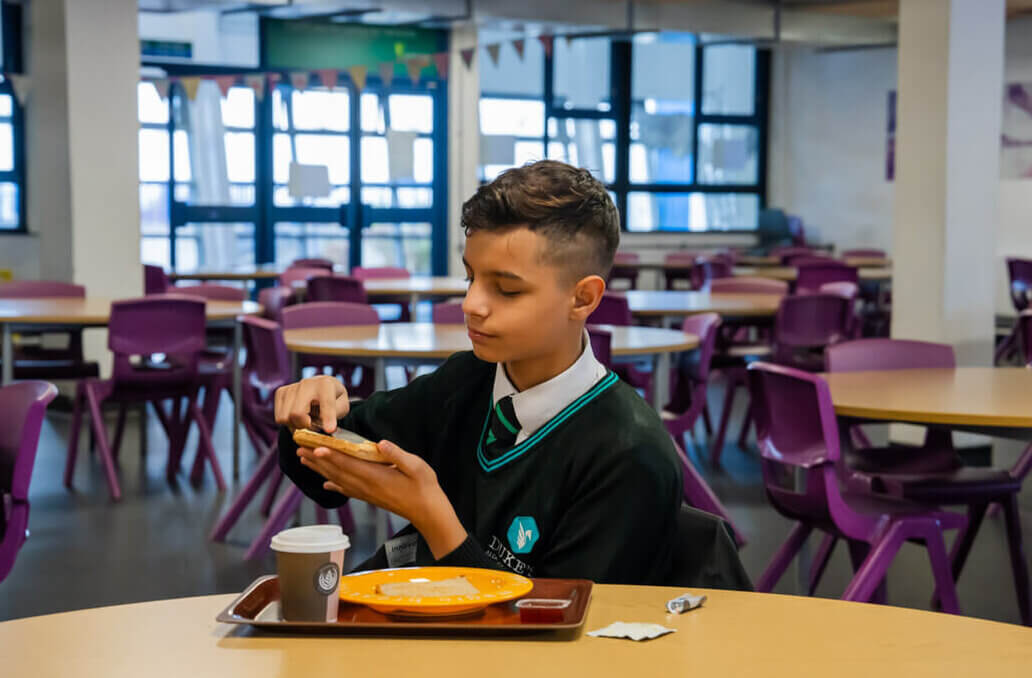
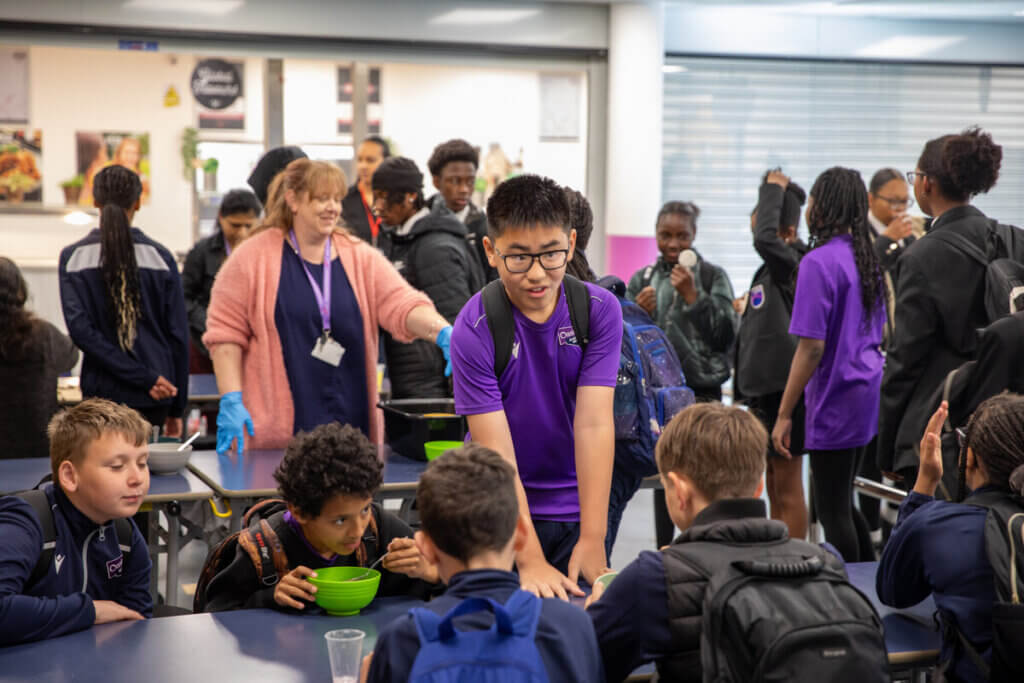
What we hear from our partner schools is clear. Breakfast is needed in secondary schools, and it is about much more than food. Schools told us that having a welcoming space, trusted adults, and a calm start to the day helps pupils feel settled, included, and ready to learn.
This year for the first time, we asked a group of secondary-aged young people to reflect on what schools told us in our Annual Breakfast Survey.

They agreed with school staff that belonging is vital to mental health and wellbeing.

They reminded us that a stigma-free and inclusive environment is vital in ensuring access.

They told us that concerns about what others might think and difficulties around timing were key barriers.
This page is a deep dive into what schools and young people told us about breakfast in secondary schools. We explore how school breakfast provision can support wellbeing, a sense of belonging, and how it can help ease pressure on families. We also look at how we can remove barriers so that more young people can access breakfast to learn and thrive.
When hunger and worry follow pupils into the classroom, learning takes the hit
Schools told us how cost of living pressures, poverty, and financial stress are all shaping how young people arrive at school. Too many of their pupils are arriving hungry, anxious, or distracted by worries beyond their years. This reflects the wider national picture. The Joseph Rowntree Foundation’s 2026 cost of living tracker found that 7.4 million households are going without basic essentials such as food, and more families are falling into debt.2 Teenagers are not immune to these pressures. Many understand what is happening at home and bring that worry into the classroom.
97%
of partner secondary schools say that pupil’s learning is impacted by the cost of living
94%
of partner secondary schools say that pupil’s learning is impacted by their mental health & wellbeing
93%
of partner secondary schools say that pupils’ learning is impacted by hunger and access to food
Magic Breakfast partner school
There can sometimes be assumptions that older pupils are more independent and therefore less affected by food insecurity or financial pressures at home. In reality, many secondary pupils are balancing complex challenges outside school which directly affect their learning and wellbeing.
Secondary-aged student
Sometimes not eating will give me a bad head and causes me to not perform well with work at college.
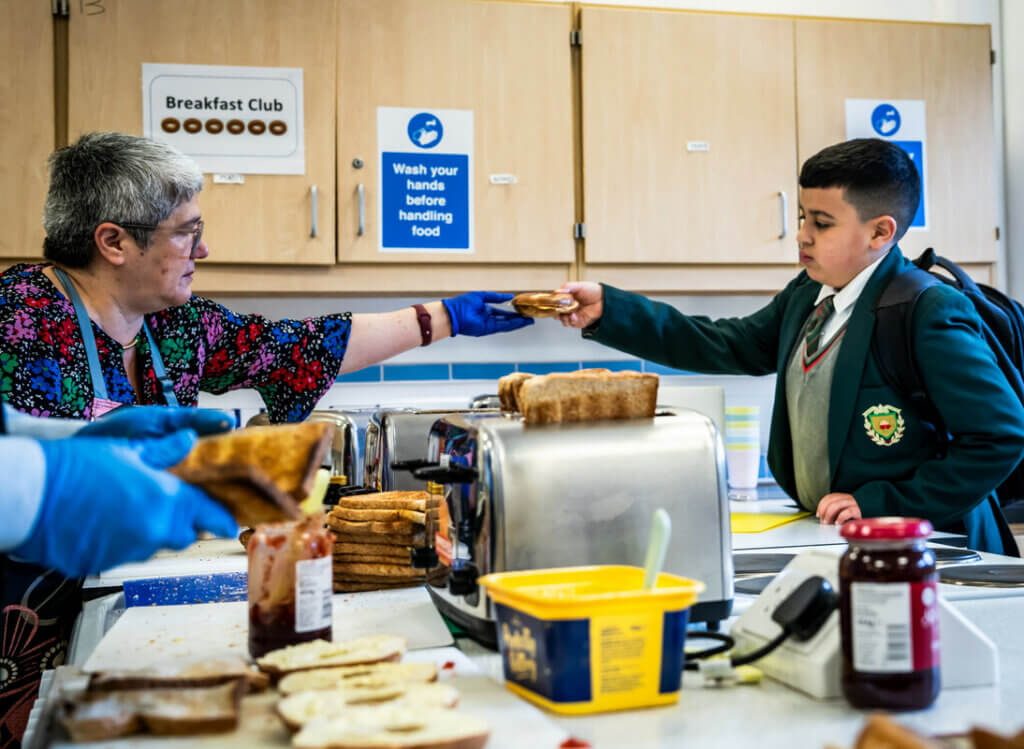
94% of secondary schools told us that mental health and wellbeing affect learning. This was the third most common factor (after the cost of living and poverty), rising from fifth place in 2025. This suggests that mental health is increasing as a concern for pupils at our partner secondary schools.
Unfortunately, this mirrors what the research shows. Mental health conditions amongst adolescents are on the rise. As of 2023, 1 in 5 children and young people in the UK had a probable mental health condition. A high proportion of them were in families facing financial worries.3 Children and young people with poorer mental health are also more likely to miss school.
This is why it is more crucial than ever to create spaces in school that support the mental health and wellbeing of pupils.
To what extent does mental health impact learning?
Breakfast provision helps get learning back on the menu
Refuelled, regulated, and ready to learn
When pupils arrive at school where free breakfast is available, they know that they can fuel the day. This means they are better able to concentrate and regulate their emotions as they are not distracted by hunger or worry. This supports a calm learning environment for everyone. When pupils feel supported and engaged, they are ready to learn and better able to participate in classrooms. This enables them to develop the skills, knowledge, and confidence to progress into further education, training, and employment.
92%
of partner secondary schools agree breakfast improves concentration in class
84%
of partner secondary schools agree breakfast improves educational attainment
76%
of partner secondary schools agree breakfast improves general behaviour
Magic Breakfast partner school
Arriving at school knowing there is a warm, safe, and free space with food creates a critical emotional anchor. It provides a soft landing into a large, often intimidating school environment, giving students a moment to regulate their anxiety, talk to a trusted adult, and mentally prepare for the day.
Magic Breakfast partner school
When a teenager sits in a classroom hungry, their brain is physically locked in survival mode, meaning they cannot process a lesson, manage their emotions, or retain information. Providing a free breakfast is a universal equaliser that strips away the stigma of poverty.
A warm welcome fosters belonging
Beyond the reassurance of something to eat, how breakfast happens matters too. It can be an opportunity for pupils to have a gentle start to the day and feel like school is a place for them. This is key, because we know that when children and young people feel they belong at school, mental health and emotional wellbeing is better.4
90%
of secondary schools agree breakfast helps pupils feel like they belong
88%
of secondary schools agree breakfast enhances staff and pupil relationships
81%
of secondary schools agree it supports improved mental health and wellbeing
This year we partnered with Place2Be to better understand how breakfast fosters belonging. For the first time, we asked our partner schools what it is about school breakfast provision that helps pupils feel they belong. They told us that a warm welcome, a familiar face, a safe space, and the chance to connect with friends can help young people feel valued.
What is it about your school breakfast provision that helps pupils feel they belong and are part of the school community?
What is it about your school breakfast provision that helps pupils feel they belong and are part of the school community?
The young people we spoke to about our survey results told us that belonging “feels like you are a part of a place and it’s your safe space” and “feels like you’re a part of a community that doesn’t shame or judge you”. They didn’t fully agree with the schools on what are the most important facilitators of belonging at a breakfast provision. Instead of a warm welcome from staff, they felt that an inclusive, stigma-free environment where everyone feels welcomed is most important. Without this, pupils will never feel like they belong.
Many felt that activities are higher in importance: “You need activities to encourage connection, and those ice breakers and games build the safe space needed”. In response, we are expanding our Magic Makers programme in secondary schools, supporting corporate partners to provide activities that enhance the breakfast experience, help pupils connect, and support their enrichment.
St Andrews Secondary School, Scotland
For some young people, breakfast provision is the difference between arriving stressed, hungry, and unsettled, and arriving calm, included, and ready to learn. […] Young people don’t feel singled out, they just feel part of something.
One less worry in the morning
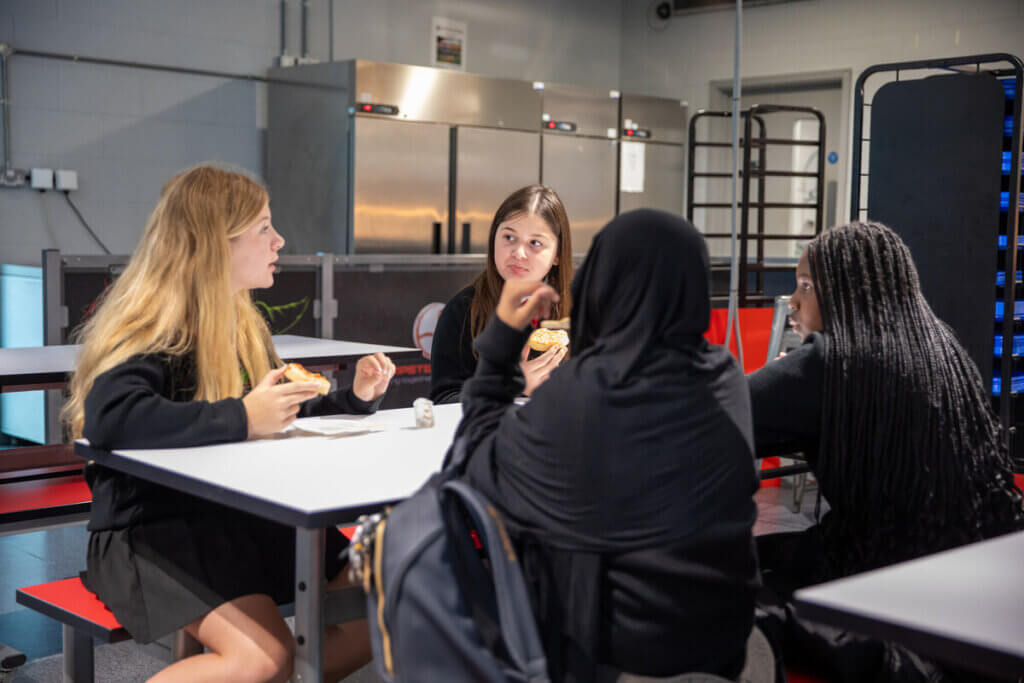
Knowing there is breakfast waiting at school means pupils and families can start the day with one less worry. For parents and carers under pressure, it offers relief from rising food costs and morning stress. It also gives reassurance that their child will begin the day fed, welcomed, and supported. For pupils, that reassurance can replace anxiety with calm, helping them arrive ready to focus, connect, and learn.
79%
of partner secondary schools agree breakfast alleviates pressure on families’ budgets
80%
of partner secondary schools agree breakfast reduces household morning stress
83%
of partner secondary schools agree breakfast helps with safeguarding and pastoral support for pupils and families
Magic Breakfast partner school
One family was facing significant financial strain due to the rising cost of living, which made managing morning routines and grocery budgets increasingly stressful. This pressure often led to a rushed, anxious start to the day, and the pupil frequently arrived at school unsettled and unready to learn.
After […] attending the school’s Breakfast Club, the family reported a massive sense of relief, noting that knowing their child could get a warm, nutritious meal at school took a huge financial and emotional weight off their shoulders.
School staff observed that the daily provision completely transformed the pupil’s mornings, replacing early-morning anxiety with a calm, social routine that dramatically improved their punctuality, emotional stability, and focus in their first-period classes.
Shaping secondary school breakfasts
We know there is a need for breakfast provision in secondary schools. We know that when it is done well it can help pupils feel like they belong, are ready to learn, and able to thrive.
We have learned from over 10 years working with secondary schools how to adjust breakfast to work with older children. However, breakfast uptake in secondary schools is still consistently lower than in primary schools. We have a good understanding of why this is.
Our recent secondary research identified multi-level factors which prevent teenagers eating breakfast. There was a big crossover between this and what schools told us in our 2026 Annual Breakfast Survey.
The young people we spoke to about our survey results agreed that timing is a barrier: “[You] don’t have time to go, especially if you live far from school. The main focus is just getting to school on time.” Many suggested that if breakfast was later, more pupils would attend. This is an idea our innovation team is exploring. We want to assess the impact of a breaktime breakfast across the wider school food day and ensure nutritional intake is maintained.
But the biggest barrier for the young people we spoke to wasn’t timing, it was social perception, the ”fear of being remembered as needy or coming from a low-income household can deter students from participating.” They suggested appointing ‘Breakfast Ambassadors’, pupils who promote breakfast at school to remove any stigma. Many Magic Breakfast partner schools already do this with success. Our innovation team ran a pilot exploring this in 2025. The pilot found that being an ambassador improved skills in communication, leadership, public speaking, and teamwork. In the coming year, this programme will be launched in a few schools and developed further by our community engagement team.
Interestingly, a preference for less healthy foods was not mentioned as a barrier. Instead, the young people told us that they want to eat healthily. However, they agreed that when there isn’t a free school breakfast, convenient and unhealthy choices are easier and cheaper: “Fizzy drinks, energy drinks and sweets in the mornings are quick and easy to get”.
To address these challenges and more, teams across Magic Breakfast are working hard to find solutions. Take a look and see how you can get involved…
Developing breakfast provision: This team supports schools to develop a breakfast provision tailored to their setting, to ensure that breakfast reaches those that need it most. Where timing is a barrier, they may recommend flexible approaches, such as grab and go models in several locations that allow pupils to collect food on their way into school without needing to arrive early.
Engaging school communities: The team also plays a crucial role in raising awareness. Through assemblies, workshops, staff sessions and visits to school breakfast provisions, they help pupils and staff understand what is available and why breakfast is so important.
We know that lasting change cannot be achieved by one organisation alone. By working with external partners, we want to address wider systemic barriers and create long-term change for children and young people.
The innovation team is testing and developing ways to increase breakfast uptake among secondary pupils. A current focus is timing, as 37% of our partner secondary schools said making breakfast available at breaktime could support more pupils to eat. The team is exploring the feasibility and impact of extending breakfast provision beyond the start of the school day. They are investigating what this could mean not only for uptake, but also for school routines, and the wider school food system. The team is also working on approaches that address barriers linked to awareness and stigma.
The research team wants to strengthen the evidence base for universal secondary school breakfast provision with child and young person voice at the centre. They will explore how breakfast provision in secondary schools supports pupils’ health and wellbeing, as well as its potential contribution to longer-term outcomes, such as improved employment prospects and reduced involvement in crime.
This team campaigns to raise awareness of how important breakfast is for young people. They use our research and evidence to support policy development and influence decision makers to take action. They are also inviting parents, teachers, schools, and supporters to help shine a light on the difference school breakfast can make.
Our operations and support teams are continuously improving our offer for secondary pupils. Guided by feedback from young people, they are committed to making it accessible, appropriate and appealing. Using feedback from schools, they will continue to develop the support we offer them.
Which of the following impact learning and success at your school?
Which of the following impact learning and success at your school?

Age and gender related self-consciousness: girls show higher rates of breakfast skipping compared to boys. This could be deliberate as a weight control strategy: weight control intentions and disordered eating behaviours are closely linked to breakfast skipping patterns.

Biological and physiological factors: biological shifts can alter sleep schedules and appetite patterns. Teenagers usually have later sleep times and feel less hungry in the morning, which contributes to a lower-quality diet overall.

“I don’t usually eat breakfast because I get out so early.”
– Young person

Food preferences and dietary patterns: many young people show preferences for unhealthy foods over relatively nutritious options available in breakfast provision. Misinformation on social media can also contribute to poor food choices and understanding the importance of breakfast.

Food intolerances and allergies: breakfast provision could be avoided by children and young people with allergies and intolerances, especially if adjustments are not made to ensure breakfast provision is accessible. Children with autism spectrum disorders are significantly more likely to have food allergies and sensory-driven food selectivity can leave neurodiverse children without safe, acceptable breakfast options in schools.

Time pressures and practical constraints: lack of time due to study pressures, job responsibilities, and long travel times can create significant barriers to having breakfast.

Activity preferences and screen time: excessive screen time especially in older children due to availability of smartphones has also been associated with irregular eating patterns and reduced breakfast consumption.

External influences: children are more likely to miss breakfast when parents do the same, and families larger than five are more likely to miss breakfast. Social dynamics in school settings can either support or discourage healthy eating behaviours, and many adolescents avoid participating in breakfast programmes to prevent being perceived as poor or different.

Economic and political factors: funding shortfalls, staffing constraints, competing priorities and existing catering contracts can act as barriers to school breakfast provision.

Breakfast club policies: the National School Breakfast Programme (NSBP), which provides subsidised breakfast food and delivery for schools in areas facing the highest levels of deprivation across England, including secondary schools, is due to end in July 2026. No Government-funded breakfast provision currently exists for mainstream secondary schools in devolved nations of the UK.

Social, cultural, and knowledge barriers: such as some schools struggle to convey the benefits of breakfast attendance with parents, leading to low uptake; school leadership may regard breakfast provision as beyond the scope of the school’s responsibilities or not as a strategic priority; educational institutions may encounter challenges in developing inclusive breakfast programmes.

Technological, legal, and environmental barriers: a lack of appropriate kitchens or dining spaces, and regulatory requirements such as food safety can create additional burdens.
Teenage lifestyle and associated challenges: decline in diet quality as young people enter adolescence, may be preferences for fast food outlets.

Inequalities: geographic disparities cause inequalities, and children and young people are disproportionately affected by food insecurity. Food insecure households may have to cut down on healthy foods due to costs.

Home lives: meal consumption and wider wellbeing can be affected by young people’s home lives, and young carers can face additional, acute challenges.

School food standards: secondary schools may not be meeting school food standards, although a lack of monitoring makes this difficult to ascertain, and most young people do not enjoy school food or feel that it is healthy.
Formation of perceptions: perceptions of food are influenced by parents, peers, the school environment, and the local built environment. Social media and targeted advertising can play a significant role in shaping young people’s understanding of nutrition and disordered eating.

Gender norms: young women and girls are exposed to a culture of over dieting and may prioritise body image over health, while young men and boys are increasingly affected by body issues and may be using steroids as young as 13.
- The Food Foundation. Food Insecurity Tracker June 2026 [Internet]. 2026 [cited 2026 Sep 4]. Available from: https://foodfoundation.org.uk/initiatives/food-insecurity-tracking#tabs/Round-19
- Belfied C, Percival N. Joseph Rowntree Foundation [Internet]. 2026 [cited 2026 Sep 1].Record numbers cannot afford the essentials: JRF’s cost of living tracker, summer 2026. Available from: https://www.jrf.org.uk/cost-of-living/jrfs-cost-of-living-tracker-summer-2026
- NHS England. Mental Health of Children and Young People in England, 2023 – wave 4 follow up to the 2017 survey [Internet]. 2023 Nov [cited 2025 Dec 16]. Available from: https://digital.nhs.uk/data-and-information/publications/statistical/mental-health-of-children-and-young-people-in-england/2023-wave-4-follow-up#
- Tesolin J, Konishi C. A meta-analysis of suicidality, depression and sense of school belonging in adolescence. Educ Res Rev. 2026 Nov 1;53. doi:10.1016/j.edurev.2026.100844