
Anchor
Belonging through breakfast
Each year, we ask our partner schools about the biggest challenges they and the wider school community are facing, and how Magic Breakfast is making a difference for their pupils and families.
We know that breakfast can help remove barriers to learning caused by morning hunger. But breakfast is more than just food. This year, we worked with Place2Be to better understand how schools are using breakfast to create nurturing, inclusive environments where all children and young people feel like they belong.
Belonging is a fundamental human need. It means feeling that you are part of a group, a community, or a place. Schools are more than places of academic learning, they are also communities where children and young people should feel safe, valued, and understood.
Belonging is central to children’s wellbeing, confidence and success at school. When pupils feel they belong, they are more likely to engage, build stronger relationships and develop the resilience to thrive, boosting both their capacity for learning and strengthening their mental health. This helps them to thrive at school and strengthens social cohesion.
99%
of schools say that their Magic Breakfast provision helps set pupils up to start their school day well
95%
of schools believe that Magic Breakfast helps pupils feel they belong and are part of the school community
88%
of schools believe that Magic Breakfast reduces morning stress for families and pressure on household budgets
“A hungry child does not arrive at school ready to learn.”[1] It is also harder for children and young people to do well at school if they start the day feeling worried or anxious because of financial pressures at home.
This year’s findings show that schools are having to respond more than ever to the effects of poverty, rising living costs, and concerns about children’s mental health and wellbeing, particularly in secondary schools.
Pupil, Magic Breakfast partner school, Secondary, Yorkshire & Humberside
“When I’m hungry, I listen to my stomach rumbling, not the teacher. I think about being hungry, not about the work.”
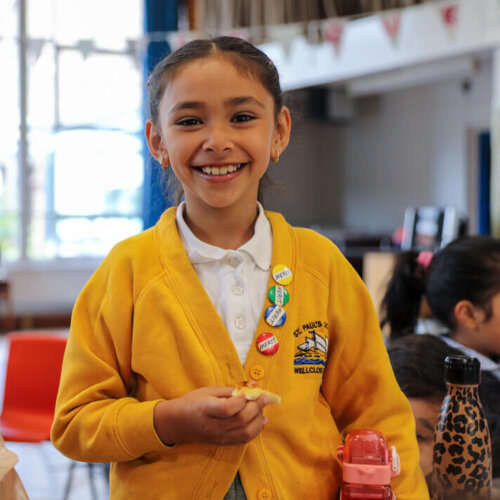
Schools told us that breakfast can help meet these challenges. It removes hunger as a barrier to learning and creates a consistent, welcoming space where pupils can spend time with friends and trusted adults. This helps them start the day feeling calm, connected, and like they belong.
Pupil, Magic Breakfast partner school
“It is worth coming early to school as it is a good way to start my day.”
Magic Breakfast partner school, Primary, Scotland
“It’s not just a meal; it’s a vital foundation for their education and wellbeing.”
Governments increasingly recognise that school breakfast can make a real difference to the lives of children and young people. From August 2027, all primary and special school pupils in Scotland will be able to access a nutritious breakfast.
In England, the Government is rolling out the free breakfast clubs programme, offering 30-minute free breakfast clubs for primary-aged pupils. Additionally, the ‘Every Child Can’ programme will support access to enrichment activities that can be offered alongside breakfast, such as art and sport.
There has never been a more important time to understand the role breakfast can play in helping children and young people thrive.
By addressing hunger, breakfast can improve educational outcomes.
Breakfast can provide enrichment opportunities that develop the skills young people need for future employment.
Breakfast can be a place where children and young people feel they belong, supporting mental health and wellbeing.
By addressing hunger, breakfast can improve educational outcomes.
Breakfast can provide enrichment opportunities that develop the skills young people need for future employment.
Breakfast can be a place where children and young people feel they belong, supporting mental health and wellbeing.
This means that school breakfast is more than just food – it is a practical way to reduce inequality, strengthen belonging, and help pupils thrive at school and beyond.
The benefits extend beyond the pupil too. School breakfast can reduce morning stress, ease pressure on family budgets, and help parents access employment and training opportunities. Together, these outcomes create the conditions for children, families and school communities to thrive.

Making our work possible
With thanks to all the schools who generously gave their time to take part in this research, to our incredible Magic Breakfast supporters and players of Postcode Lottery for making this work possible, and to Place2Be for their essential collaboration on this year’s survey.
Making our work possible
With thanks to all the schools who generously gave their time to take part in this research, to our incredible Magic Breakfast supporters and players of Postcode Lottery for making this work possible, and to Place2Be for their essential collaboration on this year’s survey.
When poverty is a barrier to potential, school breakfast matters
9 in 10 schools told us that rising living costs, poverty, and not having enough food make it harder for children and young people to learn and thrive at school.
These numbers are similar to last year, but disappointingly many schools believe that “the impact of poverty and the rising cost of living has become increasingly noticeable.”[2] This is true even for families with working parents.
We asked schools what makes it harder for pupils to learn and do well at school. This chart shows the percentage of schools that picked each factor:
94% of schools agree that children’s energy levels affect how well they do at school. Starting the day hungry can mean ‘lost learning’ – “I can’t do my work, I’m too hungry to think.”[3] Pupils who haven’t had breakfast can find it difficult to stay awake, join in with lessons, and concentrate in class. Hunger affects mood and behaviour too – schools told us that mental health and emotional wellbeing (91%) and behaviour (80%) are making it harder for pupils to learn and do well at school.
But families are struggling to afford the basic things their children need, especially food. Schools told us that “for some children, the meals they have at school often are the only nutritious meals they receive.”[4]
Parent, Monksdown Primary School, North West
“As a parent, nothing hurts more than sending your child to school without a proper breakfast. Morning hunger isn’t just about food, it’s about the guilt, the stress, and the fear that they can’t learn their best on an empty stomach.”
Families are also struggling with the cost of the school day. “Some families are less able to afford trips, extracurricular activities, or uniform items, which can limit pupils’ experiences at school.”[5]
Schools told us that some pupils do not have what they need at home to support learning either. “Access to resources is another significant issue. Not all pupils have reliable internet access, devices, or a quiet place to study at home.”[6]
87% of schools believe that attendance and punctuality affect how well children do at school. But this year more schools shared concerns that “some pupils struggle to get to school regularly due to issues like unstable housing, caring responsibilities, or the cost of transport.”[7] Rising fuel costs are especially affecting rural communities.
Living in poverty can leave parents feeling stressed or sad. It can also make it harder for them to prioritise and support their children’s learning.

Children and young people can carry these pressures with them into school. Over 8 in 10 schools told us that hectic or challenging morning routines and parent mental health and emotional wellbeing make it harder for pupils to do well at school.

Children and young people can carry these pressures with them into school. Over 8 in 10 schools told us that hectic or challenging morning routines and parent mental health and emotional wellbeing make it harder for pupils to do well at school.
Together, these challenges can leave children and young people ‘visibly disadvantaged’ by poverty. “There has been an increase in pupils arriving at school hungry, tired or anxious, particularly towards the end of the week or month. Some pupils are less likely to engage in enrichment opportunities, trips or revision sessions because of financial pressures at home.”[8]
It is unfortunately no surprise how much schools are seeing pupils struggling with mental health and emotional wellbeing.
94% of secondary schools and 90% of primary schools told us that mental health and wellbeing affect how well pupils are doing at school.
3RD
Across all secondary schools, mental health and wellbeing is the 3rd highest factor affecting how well pupils are doing at school. This issue has become more important since last year. In England secondaries it is now 2nd, up from 5th in 2025, and in Scotland secondaries it is 3rd, also up from 5th in 2025.
Magic Breakfast partner school
“We are seeing […] increased anxiety: A rise in ‘adultification,’ where older siblings in our school are worried about their parents’ finances, which prevents them from simply being children and focusing on their play-based learning.”
Magic Breakfast partner school
“We are seeing […] increased anxiety: A rise in ‘adultification,’ where older siblings in our school are worried about their parents’ finances, which prevents them from simply being children and focusing on their play-based learning.”
3RD
Across all secondary schools, mental health and wellbeing is the 3rd highest factor affecting how well pupils are doing at school. This issue has become more important since last year. In England secondaries it is now 2nd, up from 5th in 2025, and in Scotland secondaries it is 3rd, also up from 5th in 2025.
In response, schools are having to provide even more pastoral and practical support to help pupils feel safe, supported, and ready to learn.
Many schools told us they have food banks and are getting more requests for food and food bank vouchers, especially during the school holidays. They are also helping with school uniforms, subsidising school activities, and asking other services like Early Help to support families.
We know that breakfast provision gives schools the opportunity to offer the pastoral and practical support many families need every day.
Magic Breakfast partner school, Primary, East Midlands
“Poverty and the cost of living have increased the level of pastoral, wellbeing, and practical support required to help pupils access learning successfully.”
We explored why this matters and how schools can do it well with Place2Be, a children and young people’s mental health charity with over 30 years of experience providing mental health services in UK schools.
School breakfast done well sets pupils up for the day
We know the big difference having breakfast can make for children and young people – almost all (99%) of our schools told us that their Magic Breakfast provision helps set pupils up to start their school day well.
Schools told us that “poverty is a huge barrier to potential. If a pupil arrives to class hungry, they are not in the best position to learn. A child in survival mode cannot be in learning mode.”[9]

Over 9 in 10 schools also told us that eating in the morning gives pupils energy, helps them get ready to learn and supports them to stay focused in class for longer. Schools agree that this can make a real difference to pupils’ learning, helping to improve educational attainment (86%).

Over 9 in 10 schools also told us that eating in the morning gives pupils energy, helps them get ready to learn and supports them to stay focused in class for longer. Schools agree that this can make a real difference to pupils’ learning, helping to improve educational attainment (86%).
But we know that breakfast is about so much more than food. Schools told us that providing enrichment opportunities such as sport clubs and art activities at breakfast can help young people develop skills (73%) which can support access to opportunities beyond school.
Breakfast can also be a space where “pupils feel more settled, connected and ready to engage with the day ahead.”[10]
Schools told us that breakfast helps pupils feel they belong and are part of the school (95%), it builds school culture and community (93%), and strengthens relationships between pupils and staff (92%).
88% of schools also agree that breakfast “gives safeguarding/pastoral staff the perfect opportunity to have informal check-ins with key pupils.”[11]
72%
of schools believe that by removing hunger as a barrier to learning, breakfast provision can help reduce inequalities between pupils
Monksdown Primary School, North West
“Breakfast club provision reduces inequality by ensuring every child starts the day fed, settled, and ready to learn, regardless of their home circumstances. By removing the disadvantage of morning hunger, it levels the playing field and helps all pupils engage more confidently and consistently in school.”
We asked schools what difference breakfast can make for pupils. This chart shows the percentage of schools that picked each outcome:
Working with Place2Be, we wanted to better understand how schools can provide breakfast in a way that creates a sense of belonging. We asked schools how they build nurturing, inclusive environments where all children and young people feel seen, heard, and accepted.
Over 9 in 10 schools agreed that having a warm welcome from familiar and trusted staff and a consistent routine were the most important factors in creating a sense of belonging at breakfast. Schools also overwhelmingly told us that pupils value the opportunity to socialise with peers most about breakfast.
This chart shows the full list of factors impacting how pupils can feel a sense of belonging.
When breakfast is done well, the impact on pupils is clear. Schools told us pupils value the chance to “relax and catch up with friends from different year groups.”[12] They also enjoy doing activities together such as sport, board games, or crafts.
Pupil, Magic Breakfast partner school
“Our school breakfast club makes me feel safe and happy. The club is fun for everyone and I get to spend time with my friends.”
As a calm, relaxed, and predictable environment, breakfast can act as a buffer between home and the classroom, “a gentle transition into the school day, helping pupils feel settled and less rushed.”[13]
As a safe, welcoming, and inclusive space, it can also help pupils feel they can be themselves and benefit from informal check-ins with staff.

Schools told us that all of this has a positive impact on pupil behaviour (85%), and mental health and emotional wellbeing (86%).

Schools told us that all of this has a positive impact on pupil behaviour (85%), and mental health and emotional wellbeing (86%).
Breakfast done well also supports families. Knowing their child can start the day in a safe, warm place with a nutritious breakfast is reassuring for families, and 88% of schools told us that access to a school breakfast reduces morning stress and pressure on families’ budgets.
In primary schools where breakfast provision starts before the school day, 76% of schools said it also helps parents access work opportunities. Breakfast provision is “a lifeline that helps [parents] manage work commitments while ensuring their child begins the day positively”.[14]
There has never been a more important time to understand the role breakfast can play in helping children and young people thrive. This year’s findings show just how much “breakfast provision has become an important source of practical and pastoral support for many families.”[15]
This is because schools know that breakfast done well can help remove barriers to learning caused by poverty, strengthen belonging, and support pupils to thrive at school and beyond.
Alfreton Park School, All through, East Midlands
“The Magic Breakfast offer does more than provide food. It creates a calm, inclusive start to the day, removing barriers to learning and helping every pupil, especially those with additional needs, feel ready, settled, and able to succeed from the moment they arrive.”
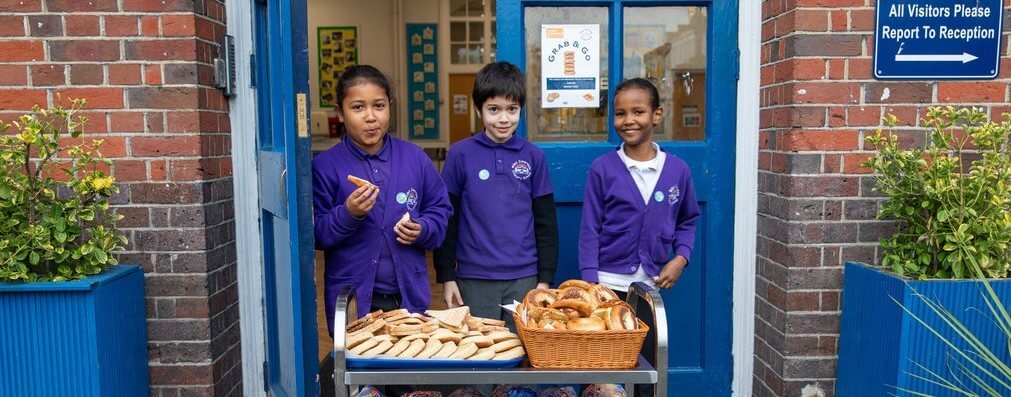
Parent, Magic Breakfast partner school, Primary, Scotland
“Before the school started the breakfast club, mornings were incredibly stressful. As a parent, choosing between putting money in the electric meter or buying enough cereal for the week is a heartbreaking position to be in. I used to worry constantly that the kids were starting their day at a disadvantage. Now, knowing they get a warm, healthy breakfast as soon as they walk through the school gates changes everything. It’s a massive weight off my shoulders financially, but more importantly, my children are happier, they aren’t anxious about being hungry, and their teachers say they are focusing much better in class.”
We’ll be sharing further findings from this year’s survey soon, including new insights on enrichment activities and a dedicated focus on secondary schools.
We will also be sharing what children and young people think about what schools have told us, and how we can best champion and provide nourishing breakfasts that help children and young people learn and thrive!
And finally, a huge thank you to everyone who supports our work and the brilliant schools that put it into action. If you’d like to help more young people experience breakfast and belonging, you can support us or join our email community to stay connected.
[1] Alfreton Park School, All through, East Midlands
[2] Magic Breakfast partner school
[3] Pupil, Magic Breakfast partner school
[4] Magic Breakfast partner school, Primary, Greater London
[5] The Clara Grant Primary School, Greater London
[6] St Andrews Secondary School, Scotland
[7] St Andrews Secondary School, Scotland
[8] Magic Breakfast partner school, Secondary, North West
[9] Magic Breakfast partner school
[10] Magic Breakfast partner school, Primary, Greater London
[11] Magic Breakfast partner school, Secondary, Yorkshire & Humberside
[12] Magic Breakfast partner school
[13] The Clara Grant Primary School, Greater London
[14] Magic Breakfast partner school, Primary, West Midlands
[15] Magic Breakfast partner school, Primary, East Midlands
Methodology
The Annual Breakfast Survey (which used to be called the Measuring and Monitoring Survey) is Magic Breakfast’s main yearly survey. We have sent a survey to our partner schools every summer term since 2012.
The survey helps us understand the biggest challenges our partner schools and their communities face, and shows us the difference having a school breakfast can make.
It also tells us how we can improve what we do to better support our schools, and helps us know what we should ask the UK Government to do to make sure no child or young person is too hungry to learn and thrive.
390
Magic Breakfast partner schools in England and Scotland responded to this year’s survey.
The biggest proportion of schools responses came from Greater London, followed by Yorkshire and Humberside and the North West of England.
Over 60% of respondents were from primary schools, followed by 27% secondary, 11% all-through and a small number of nursery -only provisions. These proportions reflect the different schools we work with at Magic Breakfast.
The majority of respondent schools are mainstream, however we also had SEND/ASN schools and pupil referral units (PRUs) tell us about Magic Breakfast in their settings.