

With over 20 years of experience, we’ve seen that breakfast does far more than fill tummies.
In SEND/ASN settings, it can be especially powerful, breaking down barriers to opportunity by supporting emotional wellbeing, learning, and independence.
What do we mean by SEND/ASN?
Some children and young people find learning harder than others because they have learning difficulties or disabilities.
In England, these pupils are said to have ‘special educational needs and disabilities’ (SEND), and in Scotland, they are said to have ‘additional support needs’ (ASN).
This spotlight shares the proven benefits and practical ingredients that make breakfast work for SEND/ASN pupils, showing how inclusive provision can give every pupil the best possible start to their day and prepare them for life beyond school.
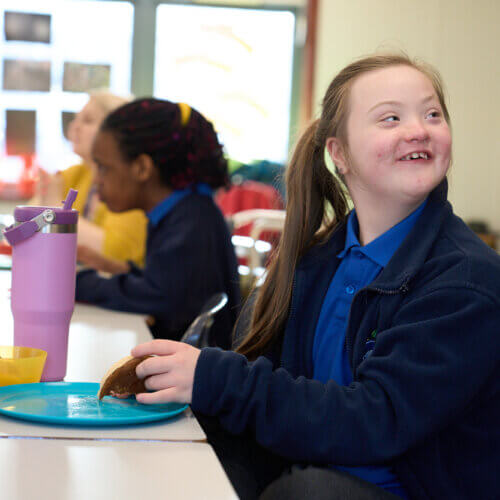
Students at the start that we couldn’t manage to get in the hall are now coming into the hall and having their breakfast and sitting with other students, which is a massive achievement.”
Mel Kirk, Vocational Lead, Nethergate Academy, Nottingham, Magic Breakfast partner school
In our research, we discovered that breakfast delivers a wide range of powerful outcomes for children and young people with SEND/ASN. These outcomes that are especially vital given the unique barriers they often face in accessing education, social opportunities and future employment.

Breakfast isn’t just a meal, it’s a gateway to independence, confidence and learning for SEND/ASN pupils.